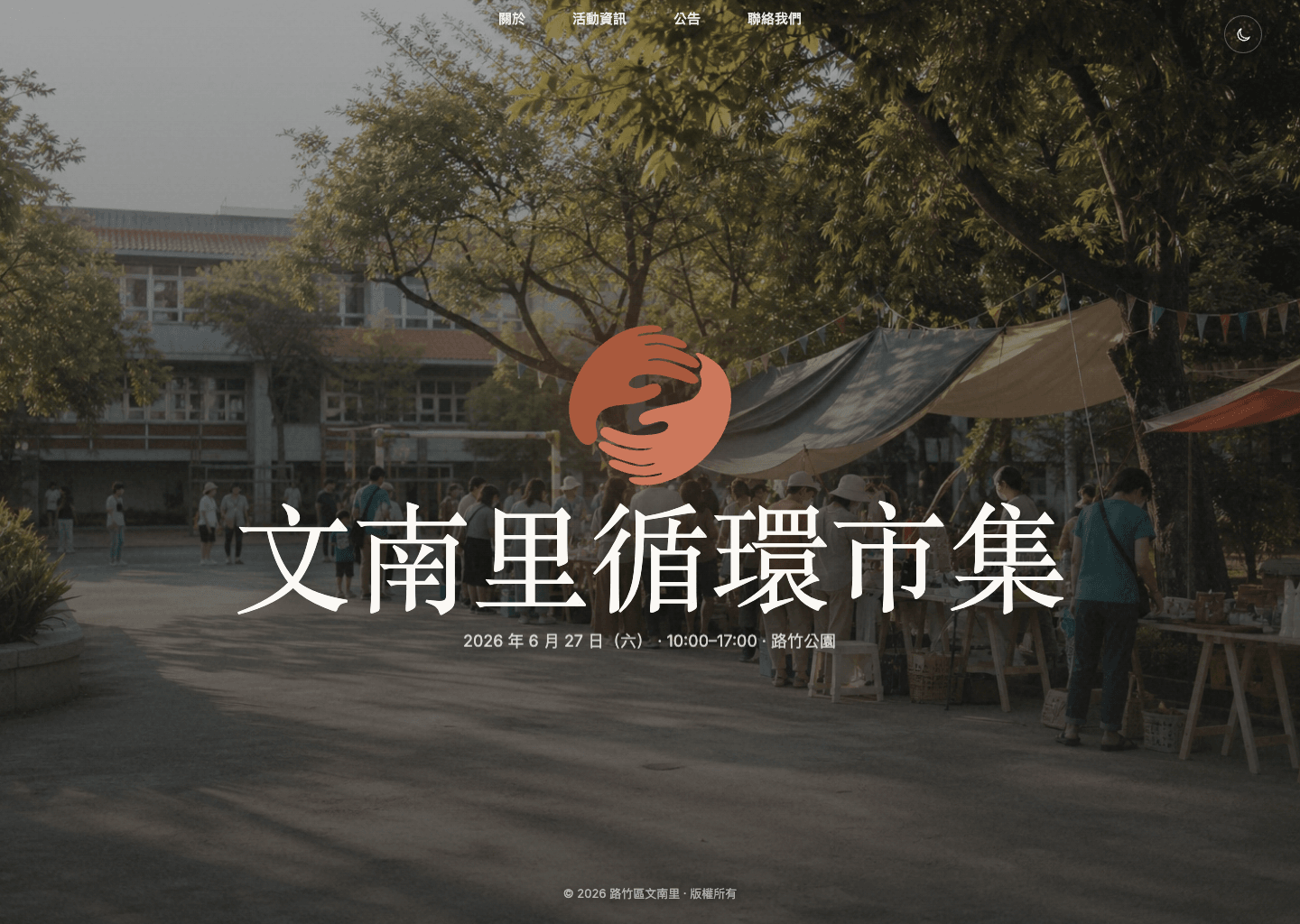
Project Positioning
A local event system, not just a landing page
The project supports Wennan Village in running its first community second-hand market. The public website introduces the event and answers common resident questions, while the internal dashboard helps organizers monitor preparation status.
Role & Scope
Owned IA, UI, frontend implementation, and AI-assisted delivery
I structured the event information, designed the public website experience, implemented the static site and interactions, connected the contact workflow, and used Codex to speed up planning, content iteration, image direction, QA, and data tooling.
Problem Context
A first-time event needs clarity without exposing unfinished operations
Residents need quick answers about time, place, admission, rain plans, and contact channels. Organizers also need booth, finance, RSVP, and risk tracking, but those details should not be mixed into the public website.
Design Goal
Make the event feel trustworthy, simple, and maintainable
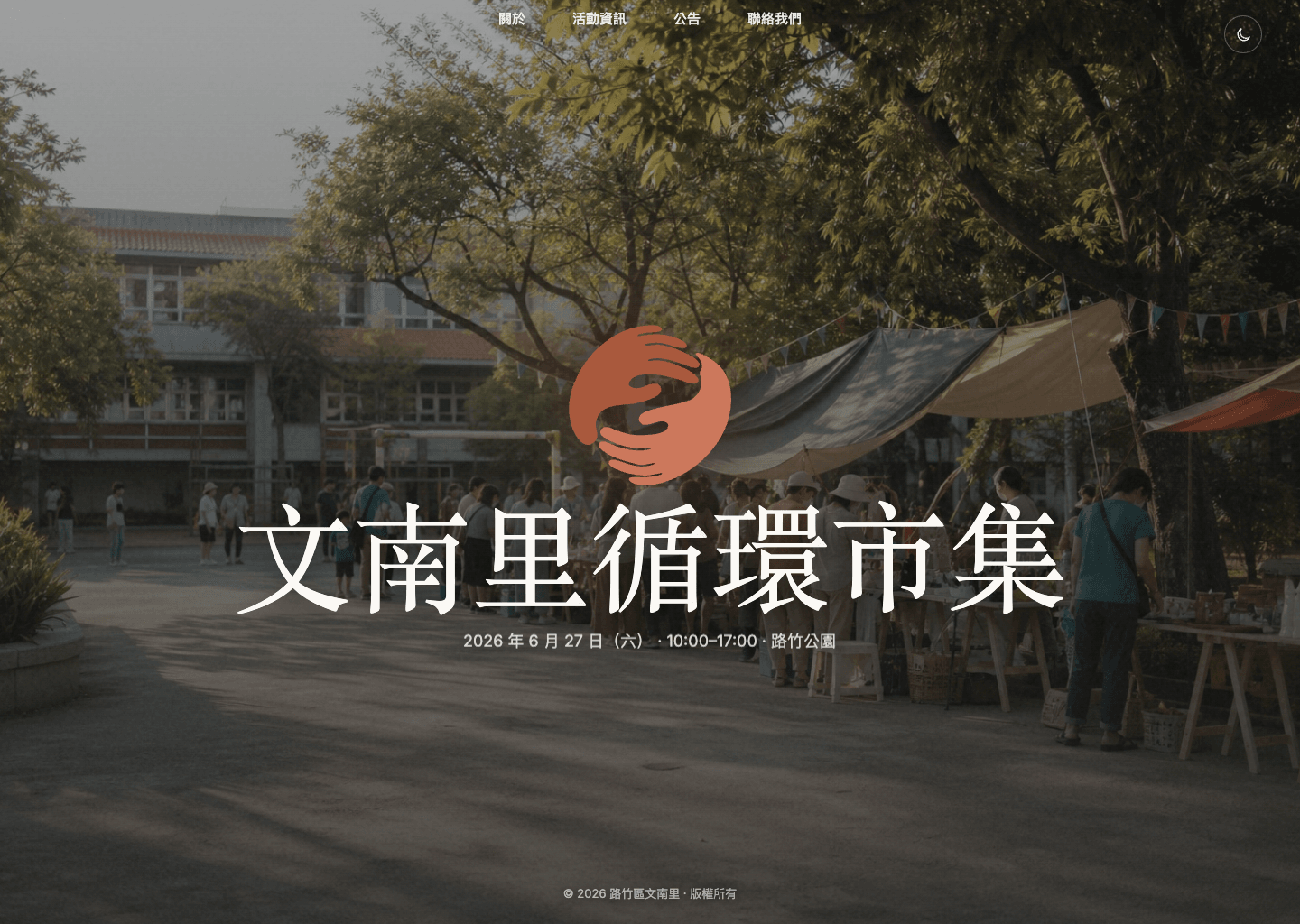
The design goal was to keep the first screen memorable while making details easy to scan. The site uses a single brand stage, four modal categories, clear cards, and a restrained motion system that supports the recycling concept without distracting from event information.
Information Insight
Residents and organizers need different information depth
The event information naturally split into two audiences: residents needed fast public answers, while organizers needed booth, finance, RSVP, and risk signals. This made the core IA decision less about adding pages and more about deciding what should stay public.
Challenge & Trade-off
Keep the public site focused while operations keep changing
The difficult part was that preparation data changed faster than public copy should. I separated the resident-facing site from the internal dashboard, so public content could stay stable while operational details remained trackable and editable.
Key Decisions
Separate public understanding from internal decision-making
- Reduced public navigation to four categories: About, Event Info, Notices, and Contact, avoiding premature exposure of booth lists or operational details.
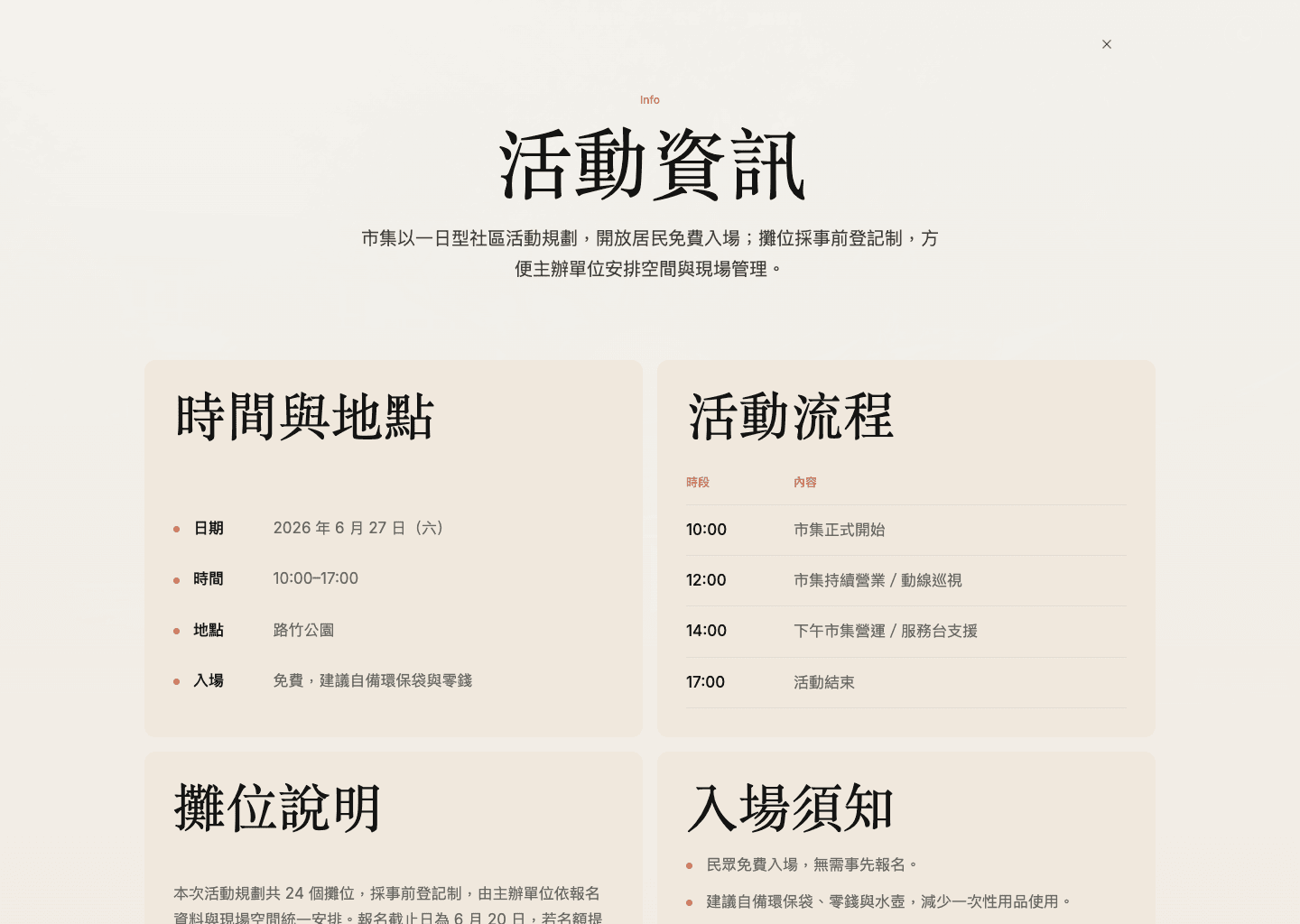
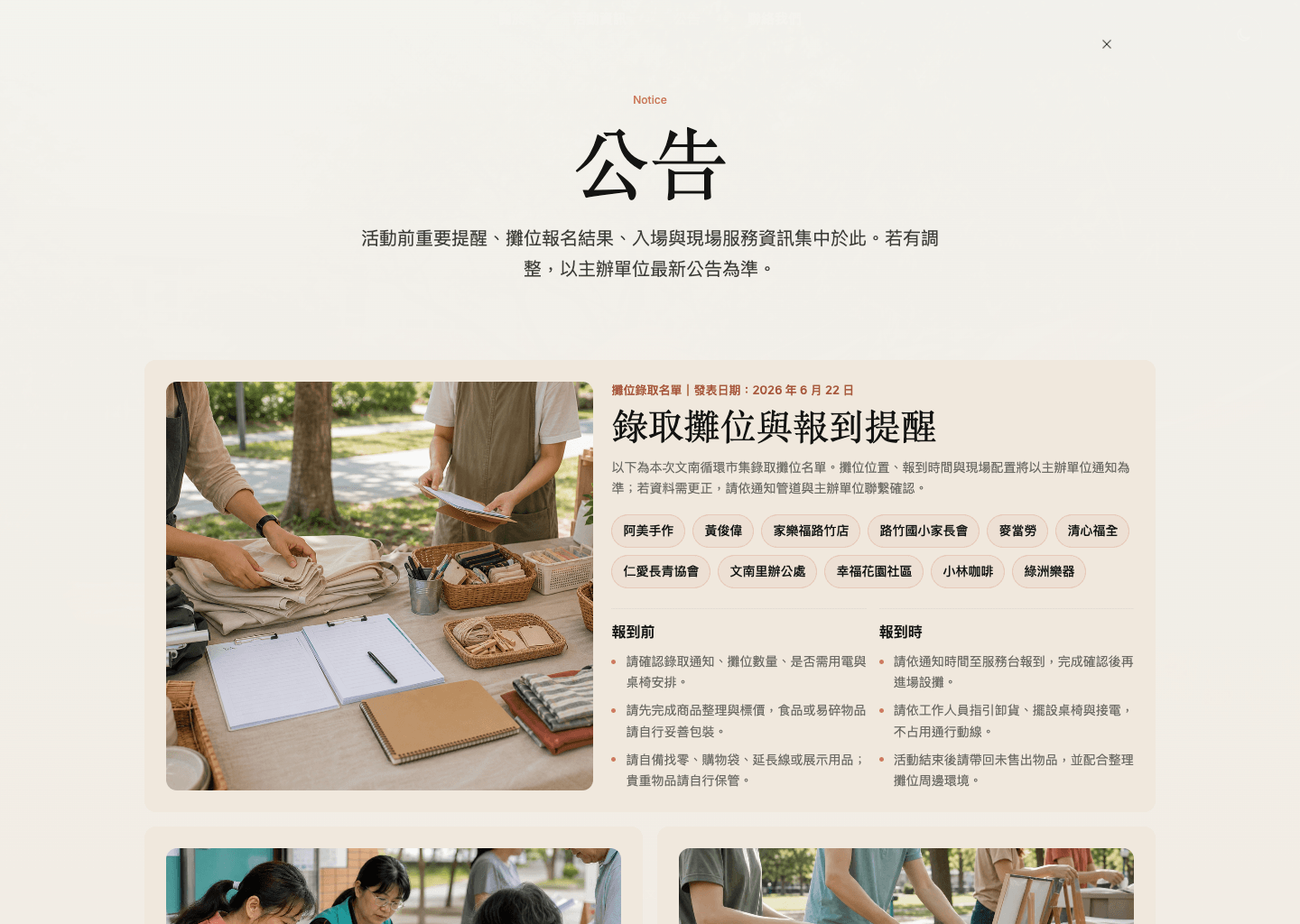
- Used modal-based progressive disclosure so residents can stay on the branded event stage while reading deeper event details.
- Moved booth progress, finance, RSVP, risk reminders, and source references into an internal dashboard generated from preparation data.
Key Screens
Public website built around fast event comprehension
The public screens show how brand impression, event details, notices, and contact flow are separated into clear entry points for residents.
Operations Tooling
An internal dashboard for preparation decisions
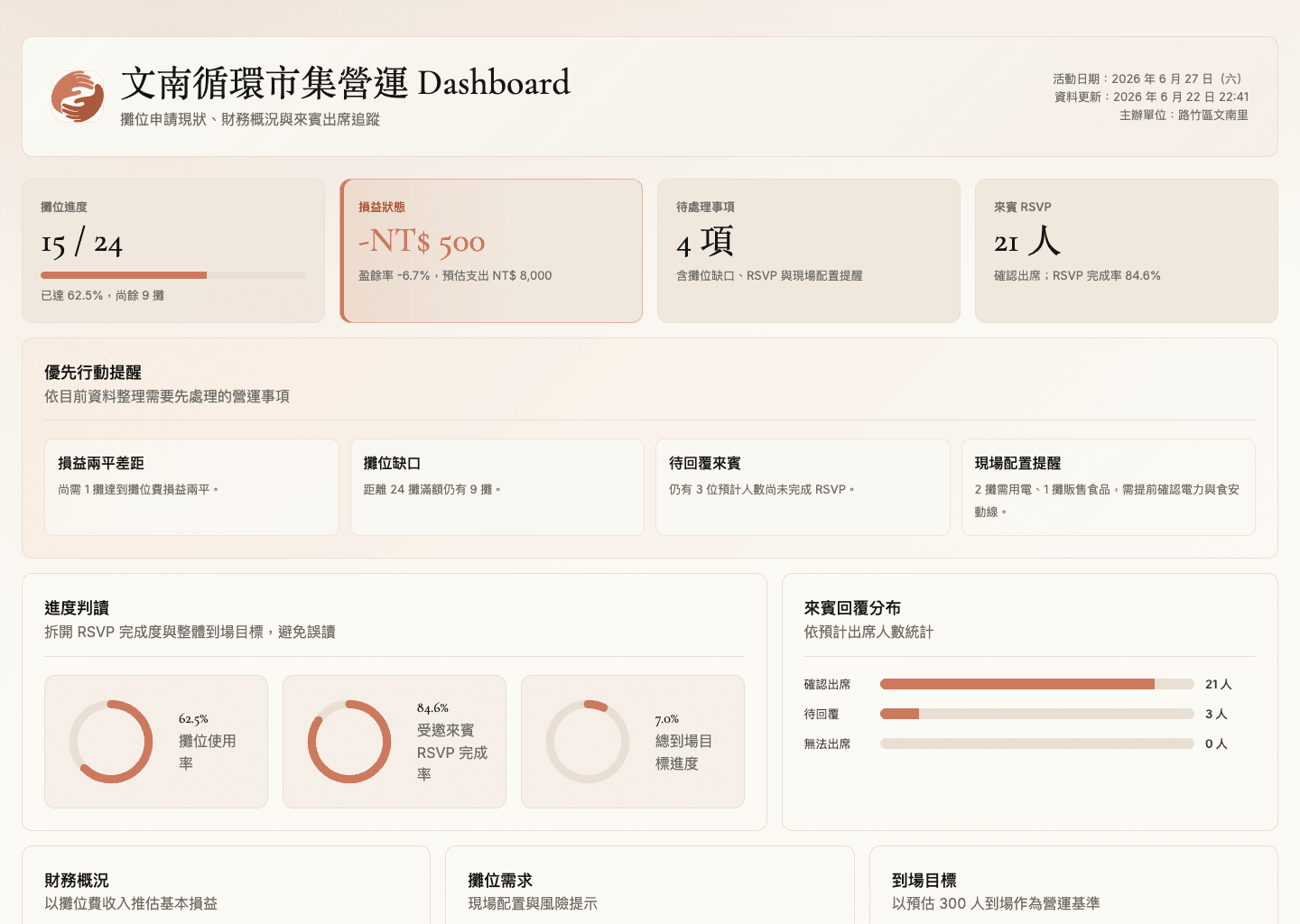
The dashboard stays outside the public deployment and summarizes booth progress, finance, RSVP status, and risk reminders, giving organizers a compact view of what needs action.
- Separated public trust-building content from private operational status and source data.
- Used KPI cards, progress donuts, bars, and action reminders to make preparation status scannable.
AI-assisted Workflow
Using Codex to accelerate planning without outsourcing judgment
Codex supported planning, copy iteration, implementation checks, asset direction, and data tooling. The design decisions still centered on audience tasks, information boundaries, public trust, and maintainability.
- Used AI as a collaborator for structuring options, finding consistency gaps, and speeding up repetitive implementation work.
- Kept the portfolio framing focused on design ownership instead of presenting the project as automatically generated.

Validation focused on whether the public site could explain the event quickly, keep internal operations private, and preserve a maintainable workflow for the organizer.
- 4 categories
- Public information architecture
- 24 booths
- Event planning capacity
- 1 dashboard
- Internal operations view
Reflection
Next iteration should connect post-event data and maintenance
The current version supports pre-event communication and preparation. After the market, the next step is to add post-event attendance estimates, organizer feedback, common questions, and a content update checklist for future community events.
- Compare pre-event assumptions with actual attendance, booth flow, and inquiry patterns.
- Turn the site and dashboard into reusable templates for future village events.